
KEY FINDING
The didgeridoo was a genuine Aboriginal musical instrument, but the early record places it in northern Australia rather than across the continent. The evidence supports a regional tradition that later become a national symbol.
The didgeridoo is now one of the most recognisable symbols of Aboriginal Australia. It appears in tourism, schools, ceremonies, performances and international representations of Aboriginal culture.
But the early historical record tells a much narrower story. The instrument was certainly Aboriginal. What the evidence does not support is the idea that it was traditionally used across Australia.
The earliest records are all from the far north
The earliest detailed written description located in the project comes from Raffles Bay on the Cobourg Peninsula in 1829. Commandant Collet Barket recorded an Aboriginal man named Mago playing ” a kind of musical instrument, a large hollow cane about 3 feet long bent at one end”. Barker said it produced two or three low, clear notes and accompanied singing.
That evidence matters because it is both early and geographically specific: Cobourg Peninsula, in what is now the Northern Territory.
In 1835, naval surgeon Thomas Braidwood Wilson published his account of Raffles Bay and described dance music produced “from a long hollow tube”. His book also recorded the instrument name as eboro, and included an illustration of the Raffles Bay dance.
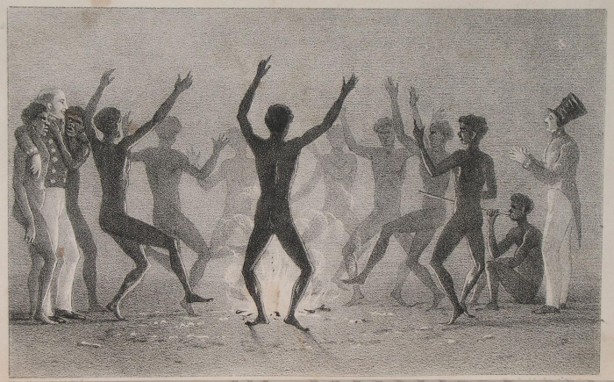
The pattern then continues. In 1845 Ludwig Leichhardt recorded the “Eboro, a long tube of bamboo”, used to accompany corroboree songs near the northern coast. In 1846 J. Lort Stokes described at Port Essington a two- to three-foot bamboo instrument called ebroo which produced a droning sound and was used at corroborees.

The historical didgeridoo was regional
This is where the modern image becomes misleading. If the didgeridoo had been a normal instrument across Aboriginal Australia, it should appear repeatedly in the extensive nineteenth-century descriptions of music, ceremony and material culture from other regions. Instead, the early positive records cluster in the tropical north. That geographic limit is reinforced by negative evidence from the south. R. Brough Smyth’s two-volume The Aborigines of Victoria (1878), an official compilation drawing on extensive material about Victorian Aboriginal life, describes dance music in detail: leaders and performers beat sticks together, while women beat folded opossum-skin rugs as drums. Yet it does not describe the long blown tube repeatedly recorded in the north.
The point is strengthened by Stokes’s own wording. After observing the ebroo at Port Essington, he wrote that it was “the only musical instrument I ever remarked among the natives of Australia”. That is not proof that no other Aboriginal group possessed musical instruments, but it shows how conspicuous this particular instrument was to an observer who had travelled widely.
Later nineteenth-century ethnographic work also continued to describe the long bamboo trumpet in northern settings. Robert Etheridge Jr.’s 1894 paper discussed bamboo instruments from northern Australia and reviewed the earlier Port Essington evidence.
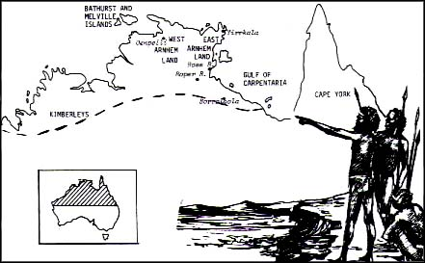
The strongest evidence-based conclusion is therefore simple: the didgeridoo was a traditional Aboriginal instrument of northern Australia, not a traditional instrument of Aboriginal Australia as a whole.
The strongest evidence-based conclusion is therefore simple: the didgeridoo was a traditional Aboriginal instrument of northern Australia, not a traditional instrument of Aboriginal Australia as a whole.
The materials tell part of the story
The earliest descriptions repeatedly refer to bamboo or cane. Barker described a “large hollow cane”. Leichhardt called the eboro a “long tube of bamboo”. Stokes likewise described bamboo.
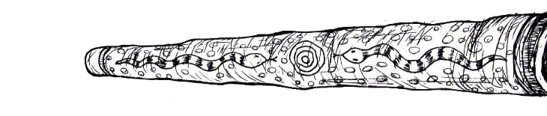
Etheridge’s 1894 paper described northern bamboo trumpets and noted that the internal diaphragms had been removed, probably by dropping live coals through the tube. Modern didgeridoos are often associated with termite-hollowed eucalyptus, which is a real method in areas where hardwood instruments were used, but the earliest documentary record should not be rewritten to fit the modern stereotype.
What was it called?
There was no single Aboriginal word for the instrument. The early northern record contains forms such as eboro, ebroo and ibero, while other groups used other names.
The English word didgeridoo is itself later. Barker’s 1829 journal contains the unusual phrase “didoggery whoan” when describing the tune or sound made by Mago’s instrument. Whether that phrase directly produced the later English word remains debated, but it is striking that the earliest records of the instrument do not call it didgeridoo.
The important historical point is not the unresolved etymology. It is that the modern national label didgeridoo does not demonstrate a single ancient Australia-wide instrument tradition.
How old is the didgeridoo?
Claims that the didgeridoo is 1,500, 2,000, 10,000 or more years old are common in modern material. The nineteenth-century documentary record does not establish any of those dates.
What can be established is that the instrument was in use in northern Australia by 1829, and almost certainly predates the first European record of it there. The exact age cannot be established from the written evidence alone. Rock art narrows the question, but does not provide a direct date for the invention of the instrument. In western Arnhem Land, didgeridoo depictions occur within the Freshwater phase of the rock-art sequence, which begins at about 1,500 years ago. Alice Moyle, using the rock-art chronology available in 1981, argued that the instrument’s spread into Arnhem Land may have occurred within the last 1,000 years or less. More recent archaeological syntheses still place didgeridoo depictions in the Freshwater phase, while explicitly cautioning that little of the rock art has been directly dated. The safest conclusion is therefore that the rock-art evidence supports a late-Holocene antiquity – roughly within the last 1,500 years – rather than claims of 10,000 years or more, but it does not establish a precise invention date.
FACT CHECK
Secure documentary position: the didgeridoo was recorded in northern Australia by 1829. Western Arnhem Land rock-art chronologies place depictions of the instrument in the Freshwater phase, beginning about 1,500 years ago, but the depictions themselves are not directly dated and do not establish a precise invention date.
What the early record actually shows
- It was documented in northern Australia.
- Early examples were described as bamboo or cane.
- It accompanied singing and dancing.
- Different local names were used.
- The early record does not support traditional use across the whole continent.
Later spread is a separate historical question. Some Aboriginal communities that are now associated with didgeridoo performance adopted the instrument in more recent times. That later history is important, but it should be identified as later history rather than projected backwards into the pre-contact past.
The next article in this series will examine how a northern instrument became a national symbol of Aboriginal Australia.
The fact worth preserving
The didgeridoo does not need to have belonged to every Aboriginal group in Australia to be significant. Its real history is more precise: it was a distinctive northern Aboriginal musical instrument, documented early, used within particular cultural traditions, and later spread far beyond its original recorded range.
That is the distinction worth preserving: what existed, where it existed, and what was added later.